






Indian National Automobile Industry: The Engine Powering Economic Growth
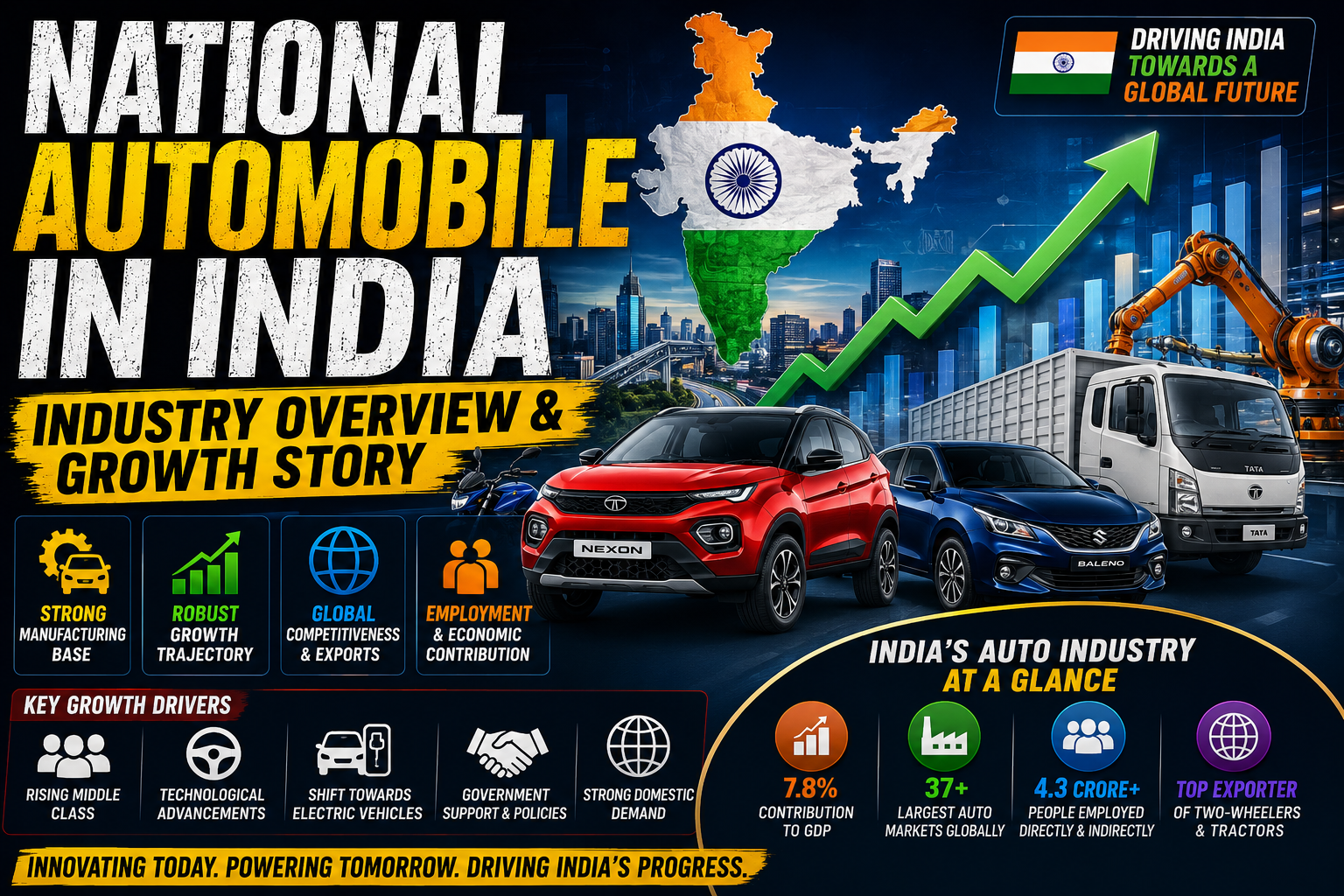
When you talk about India’s development story, the automobile industry sits at the centre of that narrative. Over the past two decades, the national automobile sector has transformed from a modest domestic business into a global manufacturing powerhouse.
The Indian automobile industry generates over ₹15 trillion in revenue annually, employs over 40 million people directly and indirectly, and accounts for approximately 12-13% of India’s total manufacturing output. This isn’t a side sector – it’s a pillar of economic strength.
Understanding the Market Size and Scope
The Indian national automobile industry encompasses multiple segments:
Passenger Vehicles Segment: India produces approximately 3.8 million passenger vehicles annually. This segment includes sedans, SUVs, hatchbacks, and MPVs. The segment has grown at a CAGR of 8-10% over the past decade.
Commercial Vehicles Segment: Commercial vehicle production stands at around 1 million units annually, supporting India’s logistics, transportation, and infrastructure development.
Two-Wheeler and Three-Wheeler Segment: This is India’s largest vehicle segment, with annual production exceeding 18 million units. Two-wheelers dominate due to affordability and India’s road infrastructure. Three-wheelers serve as public transport and commercial vehicles.
Total National Automobile Production: India currently produces over 20+ million vehicles annually, making it the world’s third-largest automobile manufacturer, behind only China and Japan.
Revenue and Economic Contribution
Market Size Metrics:
- FY 2023-24: ₹15.2 lakh crore
- Growth rate: 12-15% year-over-year
- Export value: ₹2.5 lakh crores
- Employment: 40+ million people
Sectoral Breakdown:
- Two- and three-wheeler segment: 45-50% of production volume
- Passenger vehicles: 35-40% of production volume
- Commercial vehicles: 8-10% of production volume
- Automotive components: Significant contributor
Major National Automobile Players
Domestic Manufacturers:
Maruti Suzuki:
- Market share: ~43% of the passenger vehicle segment
- Production capacity: ~2.1 million vehicles annually
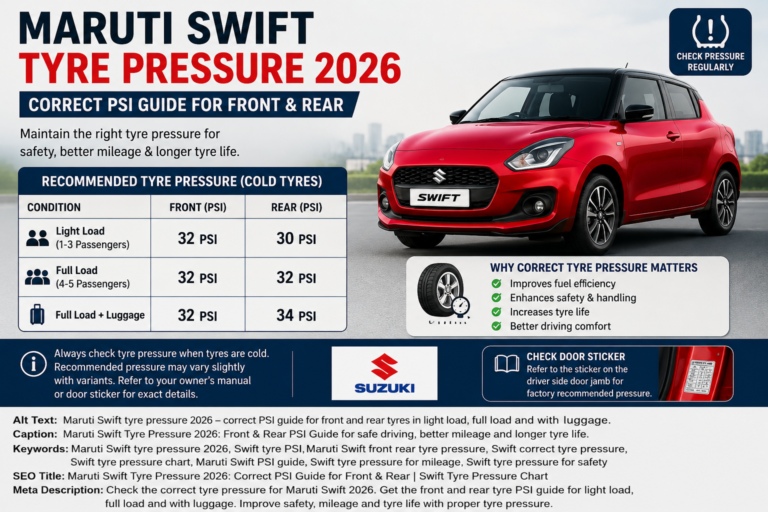
- Key models: Swift, Baleno, Vitara Brezza, Dzire
Hyundai Motor India:
- Market share: ~17% of the passenger vehicle segment
- Production capacity: ~700,000 vehicles annually
- Key models: Creta, i20, Venue, Elantra
Tata Motors:
- Market share: ~10-12% of the passenger vehicle segment
- Diverse portfolio: Cars, SUVs, commercial vehicles
- Key models: Nexon, Harrier, Tigor
Mahindra & Mahindra:
- Market share: ~9-10% of the passenger vehicle segment
- Strong in the SUV and commercial vehicle segments
- Key models: XUV500, Bolero, Scorpio
Kia Motors:
- Growing presence: ~5% market share
- New entrant with a strong product portfolio
- Key models: Seltos, Sonet, Carens
Renault and Nissan:
- Combined market share: ~3-4%
- Budget-focused positioning
Hero MotoCorp, Honda, TVS, Bajaj:
- Dominant in the two- and three-wheeler segment
Industry Challenges and Opportunities
Current Challenges:
Supply Chain Disruptions: Post-pandemic, the national automobile sector faced semiconductor shortages, supply chain delays, and rising input costs. This impacted production timelines and pricing.
Transition to Electric Vehicles: The shift from internal combustion engines to electric vehicles requires massive capital investment, new manufacturing technology, and supply chain restructuring. Indian manufacturers are adapting but face learning curve challenges.
Competition and Margin Pressure: Increasing competition, particularly from international players entering India, puts pressure on domestic manufacturers’ profit margins.
Infrastructure and Charging Network: For EV adoption, India needs extensive charging infrastructure. The current infrastructure is inadequate for mass EV adoption.
Opportunities:
EV Revolution: Government incentives, improving battery technology, and environmental consciousness create opportunities for EV manufacturers.
Export Growth: India has become an export hub for automobiles. Global demand for Indian-made vehicles provides growth opportunities.
Domestic Market Growth: A rising middle class, increasing income levels, and improved road infrastructure drive domestic demand.
Technology Integration: Autonomous vehicles, connected cars, and advanced driver assistance systems represent future opportunities.
Government Initiatives Supporting the National Automobile Sector
Make in India Initiative: Government promoting domestic manufacturing, attracting global manufacturers to set up plants in India.
Production-Linked Incentive (PLI) Scheme: Offering incentives for manufacturers meeting production and export targets, particularly for electric vehicles.
Faster Adoption and Manufacturing of Hybrid and Electric Vehicles (FAME Scheme): Direct subsidies for EV purchasers, supporting infrastructure development.
National Automobile Scrappage Policy: Encouraging replacement of old vehicles, which we’ll discuss in detail later.
Auto Industry Vision 2032: A government roadmap aimed at making India a $300 billion+ auto industry by 2032.
Regional Manufacturing Hubs
Tamil Nadu: Home to multiple manufacturing plants (Hyundai, Renault, Nissan, Kia). The state accounts for over 25% of India’s automobile production.
Gujarat: Major hub for Maruti Suzuki, General Motors, and component manufacturers.
Maharashtra: Location of Tata Motors, Bajaj Auto, and multiple component suppliers.
Telangana and Andhra Pradesh: Emerging hubs with several new manufacturing facilities.
Haryana and Delhi NCR: Multiple component manufacturers and assembly units.
Employment and Skill Development
The national automobile industry provides direct employment to over 900,000 people and indirect employment exceeding 40 million.
Skill Requirements:
- Manufacturing and assembly technicians
- Automotive engineers
- Quality control specialists
- Logistics and supply chain professionals
- Software developers (for connected and autonomous vehicles)
Skill Development Programmes: Various automotive training institutes, government vocational programmes, and manufacturer-sponsored training prepare the workforce for industry needs.
Export Performance
India exports automobiles to over 190 countries worldwide.
Export Statistics:
- Annual export value: ₹2.5+ lakh crores
- Top export destinations: Japan, USA, South Korea, Germany, UK
- Primary exports: Maruti vehicles, Tata commercial vehicles, Honda motorcycles, Bajaj two-wheelers
Export Potential: With improving manufacturing quality and scale, India’s export potential in automobiles remains significant.
Future Outlook for the National Automobile Industry
Growth Projections: The Indian automobile industry is projected to grow at a CAGR of 12-15% through 2030, reaching an industry size of ₹25-30 lakh crore.
EV Transition: Electric vehicles are expected to account for 20-25% of total vehicle sales by 2030, up from the current 2-3%.
Technology Integration: Autonomous driving, vehicle connectivity, and AI-powered features will become standard.
Supply Chain Localisation: Greater focus on developing local supply chains for critical components, reducing import dependence.
FAQs: National Automobile Industry
| Q: What is India’s rank in global automobile manufacturing? A: India is the world’s third-largest automobile manufacturer, producing over 20 million vehicles annually. Only China and Japan produce more vehicles globally. |
| Q: How many people work in the Indian automobile industry? A: Directly, over 900,000 people work in automobile manufacturing. Including indirect employment (suppliers, dealers, and service centres), the figure exceeds 40 million. |
| Q: What are India’s main automobile exports? A: India primarily exports passenger vehicles (Maruti models), commercial vehicles (Tata), and two-wheelers (Hero, Honda, Bajaj). Export value exceeds ₹2.5 lakh crore annually. |
| Q: Is the Indian automobile industry profitable? A: Yes, but profit margins have compressed due to competition and rising input costs. Many manufacturers report declining margins despite volume growth. |
| Q: What percentage of Indian vehicles are electric? A: Currently, electric vehicles represent only 2-3% of total vehicle sales. The government’s target is 30% EV sales by 2030. |
| Q: How is the Indian automobile industry affected by global supply chains? A: Post-pandemic disruptions highlighted India’s dependence on imports for semiconductors and advanced components. The industry is now focusing on localisation. |