








NADA: The Voice of India’s Automobile Dealers
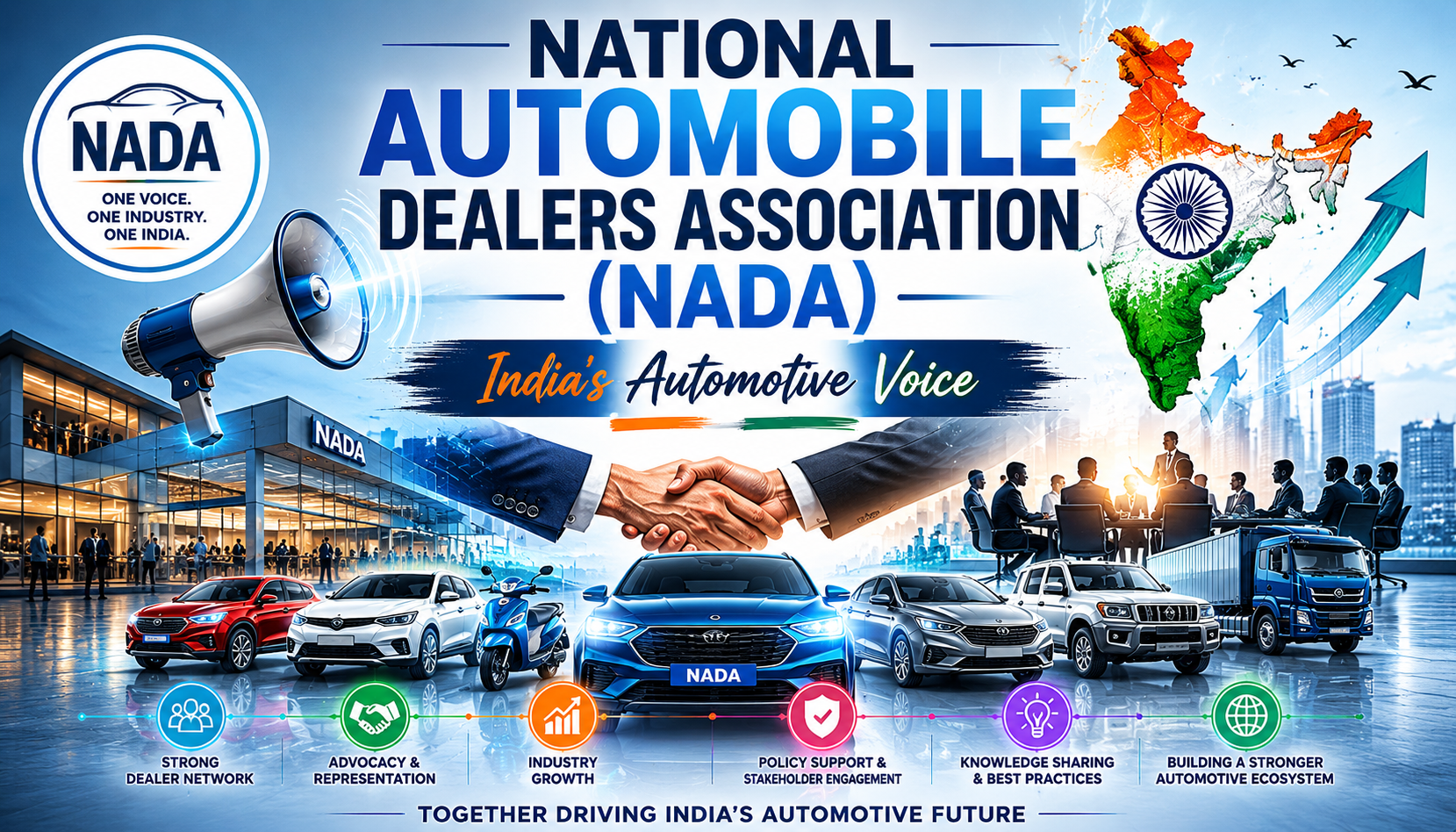
The National Automobile Dealers Association (NADA) is India’s apex organisation representing the interests of automobile dealers across the country. With a membership exceeding 15,000 dealerships, NADA is the authoritative body advocating for the automotive retail sector.
Understanding NADA is crucial for anyone involved in automobile retail, whether as a dealer, manufacturer, consumer, or industry stakeholder.
What is NADA?
Organisation Overview:
NADA is a non-profit organisation established to represent the interests of automobile dealers in India. Founded to provide a unified platform, NADA works with manufacturers, government bodies, and consumers to ensure a healthy automotive retail ecosystem.
Key Characteristics:
- Membership: 15,000+ dealerships
- Representation: All major automobile brands
- Geographic coverage: All Indian states and union territories
- Focus: Retail, consumer welfare, dealer interests
Mission:
NADA’s mission is to:
- Safeguard the interests of automobile dealers
- Promote fair dealership practices
- Support consumer welfare
- Advocate for industry-friendly policies
- Build professional standards in retail
Membership and Structure
Membership Categories:
Category A: Passenger Vehicle Dealers
- Dealerships selling cars, SUVs, and hatchbacks
- Includes authorised dealers of all major brands
- Membership: ~8,000-9,000 dealers
Category B: Commercial Vehicle Dealers
- Dealerships selling buses, trucks, tippers
- Specialised dealers in the commercial segment
- Membership: ~2,000-2,500 dealers
Category C: Two-Wheeler and Three-Wheeler Dealers
- Motorcycle and scooter dealers
- Three-wheeler and auto-rickshaw dealers
- Membership: ~4,000-5,000 dealers
Associate Members:
- Component suppliers
- Service centre operators
- Finance companies
- Insurance providers
Organisational Structure:
- National President and Executive Committee
- State-level organisations (SADA – State Automobile Dealers Associations)
- Committee-wise structure (pricing, consumer affairs, HR, etc.)
Core Functions and Activities of NADA
1. Advocacy and Representation:
Government Relations:
- Interface with the Ministry of Road Transport and Highways
- Interact with the GST Council on taxation matters
- Coordinate with RTO and enforcement agencies
- Participate in policy formulation discussions
Manufacturer Relations:
- Negotiate the terms and conditions of the dealership
- Address dealer grievances against manufacturers
- Facilitate industry discussions on pricing and incentives
- Mediate conflicts between dealers and manufacturers
2. Standardisation and Professional Development:
Industry Standards:
- Develop codes of conduct for dealerships
- Establish best practices for customer service
- Create training programs for dealer staff
- Promote professional standards
Dealer Training:
- Sales and customer service training
- Product knowledge programs
- Business management workshops
- Digital literacy programs
3. Consumer Advocacy:
Consumer Welfare:
- Address consumer complaints against dealers
- Create consumer awareness programs
- Promote fair dealer practices
- Establish a grievance redressal mechanism
Price Standardisation:
- NADA publishes “NADA Used Car Price Guide”
- Provides fair market value assessment for used vehicles
- Used by lenders and insurance companies
- Helps prevent price manipulation
4. Industry Statistics and Market Intelligence:
Data Collection: NADA collects comprehensive automotive retail data.
- Monthly sales figures by brand and model
- Inventory levels across the dealership network
- Customer preferences and trends
- Regional market analysis
Publication of Reports:
- Monthly NADA vehicle sales reports
- Used vehicle market reports
- Industry outlook and forecasts
- Consumer sentiment analysis
Market Intelligence Function:
- Monitor industry trends
- Provide analysis to members and stakeholders
- Forecast future market movements
NADA’s Impact on the Automotive Industry
Influencing Dealership Terms:
NADA plays a crucial role in negotiating dealership terms:
Dealer Protection:
- Negotiate reasonable margins
- Protect against unfair cancellation
- Ensure transparent dealer agreements
- Support grievance redressal
Success Example: In 2023, NADA successfully negotiated with manufacturers to increase dealer margins during the parts shortage period, protecting dealer interests.
Policy Advocacy:
Successful Advocacy Examples:
GST Rate Reduction: NADA advocated for lower GST rates on vehicles, ultimately securing a 5% rate for entry-level vehicles.
Dealer Financial Support: During the COVID-19 pandemic, NADA advocated for financial support for dealers, resulting in government relief packages.
EV Incentive Participation: NADA ensured that dealers are beneficiaries of EV incentive schemes, not bypassed by direct sales models.
Consumer Protection Impact:
NADA’s consumer advocacy has resulted in:
- Better warranty terms
- Faster grievance resolution
- Transparent pricing
- Standardised service charges
NADA Used Car Price Guide
One of NADA’s most valuable contributions is the “NADA Used Car Price Guide”.
Purpose:
The guide provides fair market value for used vehicles, helping:
- Buyers determine fair purchase price
- Sellers understand resale value
- Lenders assess the loan amount
- Insurance companies set premium and claim amounts
Methodology:
NADA collects data on:
- Actual selling prices of used vehicles
- Market conditions and supply-demand
- Vehicle condition and mileage
- Regional variations
The data is compiled into monthly price guides covering all major vehicle models and age groups.
Usage:
- Banks use the NADA guide for loan assessment
- Insurance companies’ reference for claim settlement
- Buyers research fair market prices
- Dealers benchmark pricing
Accuracy and Reliability:
The NADA price guide is considered industry standard, though not always perfectly accurate, as
- Real market prices fluctuate based on conditions
- Regional variations exist
- Seasonal factors affect prices
- Demand and supply variations cause price swings
Challenges Facing NADA and Dealers
Manufacturers Bypassing Dealers:
The increasing trend of direct-to-consumer sales threatens the traditional dealer model.
- Tesla, Maruti (online), and others are selling directly
- Reduces the dealer intermediary role
- Impacts dealer profitability
NADA’s advocacy: Requesting level-playing-field regulations between direct and dealer sales.
E-commerce and Used Car Platforms:
Online platforms (OLX, Cars24, CarDekho, etc.) are changing the used car market:
- Facilitating direct buyer-seller transactions
- Reducing used car dealer volumes
- Price transparency (reducing dealer margins)
Dealer response: Adapting by creating online presence and digital showrooms.
Inventory Management Challenges:
Current challenges:
- Excess inventory in certain models
- Shortage in popular variants
- Working capital pressure on dealers
NADA advocacy: Better inventory planning between manufacturers and dealers.
Rising Operational Costs:
Dealers face:
- Increasing real estate costs
- Employee salary inflation
- Compliance and technology costs
- Uncertain profitability
Solution: Manufacturer support through better margins and terms.
EV Transition Impact:
Shift to electric vehicles affecting dealers:
- Reduced service revenue (fewer moving parts)
- Different after-sales service requirements
- New skill requirements for technicians
NADA’s role: Training programmes and transition support for dealers.
NADA’s Advocacy on Key Issues
Dealership Agreement Fairness:
NADA advocates for:
- Fair cancellation terms
- Reasonable notice periods
- Transparent margin structures
- Dispute resolution mechanisms
Finance and Insurance:
Advocating for:
- Fair interest rates for dealer financing
- Transparent insurance policies
- Protection against untimely policy cancellation
Consumer Grievance Redressal:
NADA operates a consumer grievance mechanism:
- Receives complaints against dealers
- Facilitates resolution
- Takes action against unethical dealers
- Publishes best practices
Government Policy Advocacy:
NADA engages with the government on:
- Road tax policies
- Emission norms
- Safety standards
- Consumer protection legislation
- EV adoption roadmap
FAQs: NADA (National Automobile Dealers Association)
Q: How many members does NADA have? A: NADA has over 15,000 member dealerships representing all major automobile brands across India.
Q: What is the NADA Used Car Price Guide? A: It’s a monthly publication providing fair market value for used vehicles, used by buyers, sellers, lenders, and insurance companies as an industry reference.
Q: How can I file a complaint with NADA? A: Contact your nearest SADA (State Automobile Dealers Association) office with details of your complaint. NADA provides a grievance redressal mechanism.
Q: Does NADA represent all automobile categories? A: Yes, NADA represents passenger vehicle, commercial vehicle, two-wheeler, and three-wheeler dealers.
Q: What is NADA’s position on direct sales by manufacturers? A: NADA advocates for level-playing-field regulations between direct sales and dealer channels to protect traditional retail.
Q: How does NADA impact automobile prices? A: NADA influences dealer margins through manufacturer negotiations, which indirectly affects retail prices and consumer affordability.
Q: What is NADA’s role in consumer protection? A: NADA receives consumer complaints against dealers, facilitates resolution, and promotes fair dealer practices.