








National Automobile Museum: Preserving India’s Automotive Heritage
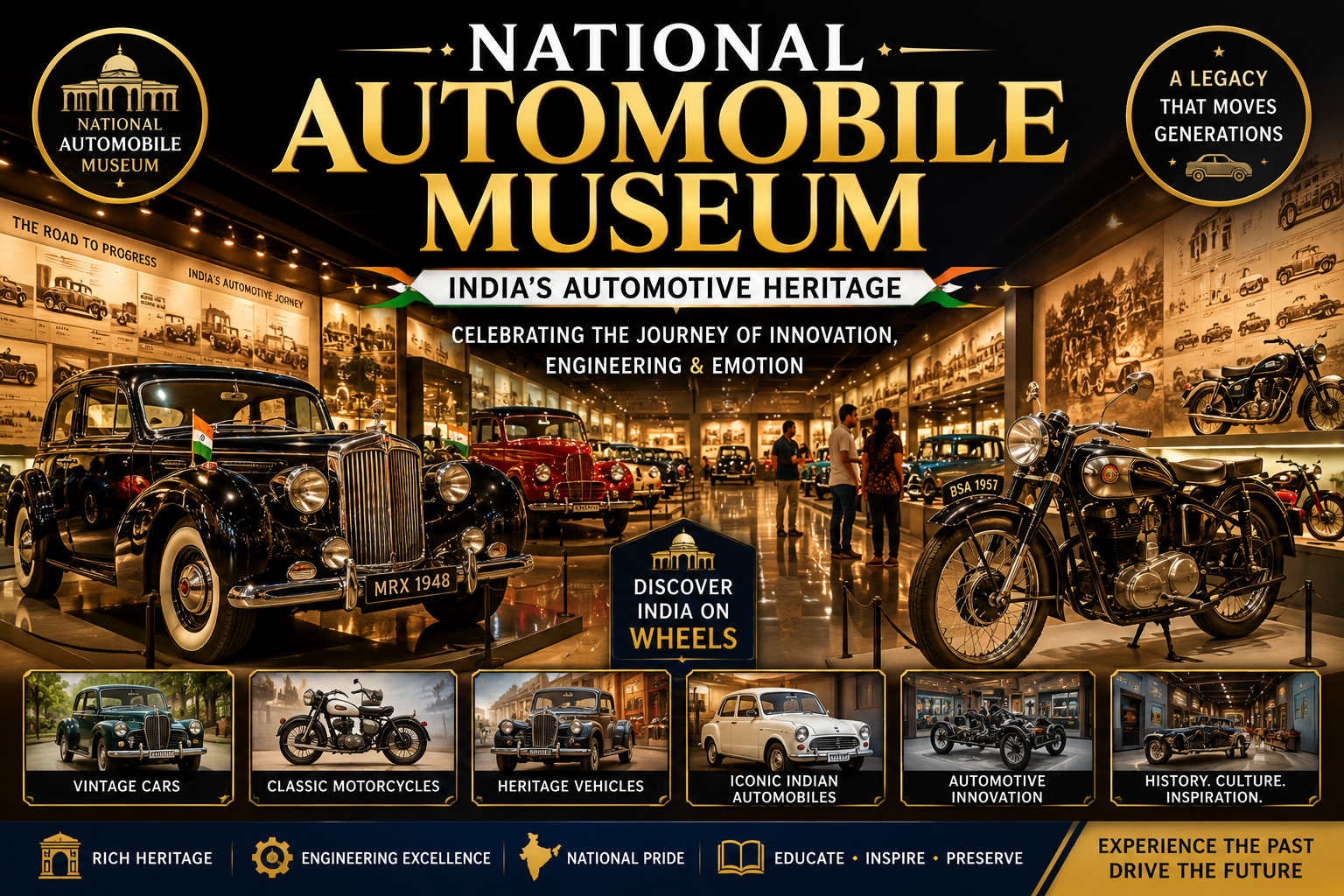
The National Automobile Museum stands as India’s premier institution dedicated to preserving, documenting, and showcasing the nation’s automotive heritage. It serves as a living repository of India’s automobile history, from early motorised carriages to modern vehicles that shaped the nation’s development.
Museum Overview and Significance
Establishment and Purpose:
The National Automobile Museum was established to:
- Preserve India’s automotive heritage
- Educate the public about automobile evolution
- Document technological progress
- Showcase vehicles that shaped Indian society
Location and Facilities:
The museum is strategically located to be accessible to the general public and automobile enthusiasts. Modern facilities include the following:
- Climate-controlled exhibition halls
- Interactive display areas
- Educational resource centers
- Research library
- Conservation workshop
- Gift shop and café
Visitor Significance:
The museum attracts diverse visitors:
- Automobile enthusiasts and collectors
- Students and researchers
- Family groups
- Automotive professionals
- History buffs
Annual Visitors: Over 200,000+ visitors annually, making it one of India’s most significant museums.
Collections and Exhibits
Core Collections:
Royal and Historical Vehicles:
The museum houses vehicles from India’s royal heritage:
- Vehicles used by Indian royalty
- Automobiles from Maharajas’ garages
- Vehicles from the independence era
- Cars used by prominent political figures
Examples:
- Vintage Rolls-Royces and Daimlers from royal collections
- Pre-independence era vehicles
- Vehicles from the maharajas’ personal collections
Iconic Indian Cars:
Vehicles significant to India’s automobile story:
- First Indian-made passenger car (Hindustan Ambassador – based on Morris Oxford)
- Premier Padmini (beloved Indian icon)
- Mahindra and Mahindra’s first vehicles
- Maruti 800 (the car that democratized personal vehicles)
- Tata Indica (India’s first truly Indian car)
Significance: These vehicles represent milestones in making automobiles accessible to ordinary Indians.
Commercial and Utility Vehicles:
Highlighting India’s industrial and transportation story:
- Early trucks and commercial vehicles
- Public vehicles
- Agricultural vehicles
- Military vehicles
International Vehicles:
Showcasing vehicles from around the world:
- European classics
- American classics
- Japanese vehicles
- Other international models
Purpose: Contextualising Indian automotive development within a global perspective.
Technology Evolution:
Exhibits showing automobile technology evolution:
- Early steam and electrical cars
- Petrol engine evolution
- Transmission systems development
- Safety technology advancement
- Emission control systems
Thematic Collections:
Organised by themes such as
- “Wheels of Independence” – vehicles from the independence era
- “Motorized Transport Revolution” – how automobiles changed Indian society
- “Technology Through the Ages” – engineering evolution
- “Luxury and Status” – premium vehicles through history
Educational Programs and Research
Educational Initiatives:
School and College Programmes:
- Automotive historians present history
- Engineers discuss technical innovations
- Industry experts share insights
- Student workshops
Research Facilities:
The museum serves as a research centre:
- Archive of automotive documents
- Library with automotive publications
- Historical photographs and documents
- Vehicle specifications and technical data
- Restoration documentation
Researchers Access:
- Automotive historians
- Academic researchers
- Students pursuing automobile-related studies
- Journalists and authors
Preservation and Conservation
Conservation Efforts:
Vehicle Restoration:
The museum operates a restoration workshop:
- Expert conservators restore vehicles
- Original materials and techniques used
- Documentation of the restoration process
- Preservation of historical accuracy
Climate Control:
Modern facilities maintain the following:
- Controlled temperature (18-22°C)
- Humidity control (45-55%)
- UV protection for paintwork
- Pest management
- Air quality monitoring
These conditions prevent deterioration of historic vehicles.
Preventive Maintenance:
Regular maintenance includes:
- Mechanical checks
- Fluid inspections
- Paint and upholstery care
- Documentation updates
Challenges:
Conservation challenges include:
- Limited funding for restoration
- Scarcity of original spare parts
- Expertise in vintage vehicle restoration
- Space constraints for collection growth
Museum’s Role in Automotive Heritage Documentation
Historical Recording:
The museum documents:
- Automotive technology evolution
- Manufacturing history in India
- Impact of automobiles on Indian society
- Individual vehicle histories
- Manufacturing processes evolution
Digitisation Projects:
Ongoing initiatives:
- Photographing the entire collection
- Creating digital archives
- Video documentation of vehicles
- Interactive digital exhibits
Publication of Research:
The museum publishes the following:
- Coffee table books on collections
- Academic papers on automotive history
- Exhibition catalogs
- Research journals
Impact on Society and Culture
Public Awareness:
The museum educates the public about:
- Indian automobile history
- Technological progress
- Cultural impact of automobiles
- Economic importance of the auto sector
Inspiration for Youth:
Museum inspires:
- Future engineers
- Automotive designers
- Automobile historians
- Industry professionals
Tourism Contribution:
As a cultural institution:
- Attracts both domestic and international tourists
- Contributes to cultural tourism
- Supports the local hospitality industry
- Generates employment
Automobile Industry Connection:
The museum maintains relationships with the following:
- Automobile manufacturers
- Dealers and dealerships
- Automotive suppliers
- Enthusiast clubs and organizations
Future Vision and Expansion Plans
Planned Expansions:
The museum plans:
- Additional exhibition halls
- Interactive and immersive experiences
- Virtual reality exhibits
- Enhanced educational facilities
- Expanded research library
Technology Integration:
Plans include:
- Augmented reality tours
- Virtual museum online
- Interactive digital platforms
- 3D vehicle models
- Digital storytelling
Collection Expansion:
Goals include:
- Acquiring more iconic vehicles
- Expanding international collection
- Better representing women’s automotive history
- Including electric vehicle evolution
Research Expansion:
Planned initiatives:
- Dedicated research wing
- Partnerships with universities
- Archive digitization
- Publication of comprehensive automotive histories
FAQs: National Automobile Museum
Q: Where is the National Automobile Museum located? A: The museum is strategically located to be accessible to the public and automobile enthusiasts across the country. [Specific location details available on the museum website]
Q: What is the entrance fee? A: Entrance fees are nominal, typically ₹100-200 for adults, with concessions for students, seniors, and children. Contact the museum for current rates.
Q: What are the museum’s operating hours? A: Generally open 9 AM to 5 PM, Tuesday to Sunday. Closed on Mondays and national holidays. Check the museum website for seasonal variations.
Q: Can photography be done inside the museum? A: Photography policies vary by exhibit. Professional photography requires prior permission. Check the guidelines at the entry or contact the museum administration.
Q: Are guided tours available? A: Yes, guided tours are available for groups and individuals. Guides explain vehicle histories, technical features, and significance. Booking recommended.
Q: Can researchers access the museum’s archives? A: Yes, researchers can access archives by appointment. Permission required from the museum administration. Useful for academic and journalistic research.
Q: Does the museum host special exhibitions? A: Yes, special thematic exhibitions are organised periodically. Check the museum website for current exhibitions and upcoming events.
Q: Is the museum accessible to persons with disabilities? A: Modern facilities include wheelchair accessibility and provisions for visitors with disabilities. Contact the museum for specific accessibility details.