






If you run a small delivery business, you already know how much of your monthly earnings goes into the diesel tank. Fuel prices rarely move down, and every extra rupee per litre comes straight out of your margin. That is why more kirana suppliers, FMCG distributors and last-mile operators are now comparing an electric mini truck vs diesel mini truck before buying their next vehicle. Below, we break down the real numbers so you can decide which one makes sense for your routes.
1. Purchase Price: Electric vs Diesel Mini Truck
This is where diesel still has the edge. A typical diesel mini truck in the sub-1-tonne to 1.5-tonne segment costs roughly ₹5.5 lakh to ₹8 lakh ex-showroom, depending on brand and variant.
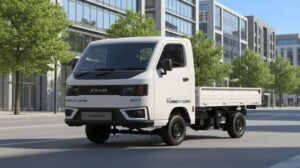
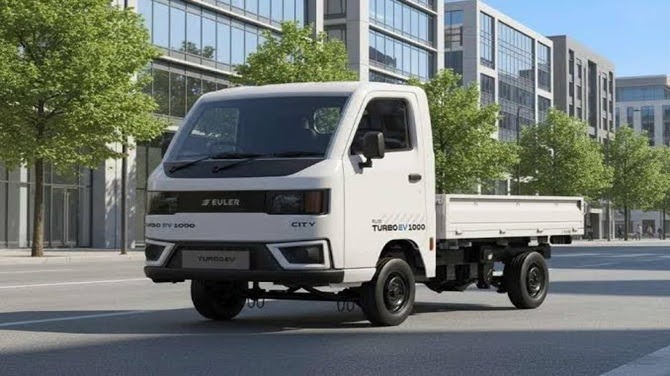
The electric mini truck price in India is higher. Popular models like the Tata Ace EV and the Euler Storm EV were launched in the ₹9 lakh to ₹13 lakh range, depending on battery size. So you will usually pay ₹3–5 lakh more upfront for an EV.
The real question is how quickly you recover that gap. That depends on how much you drive.
2. Running Cost Per Km (A Worked Example)
Let’s take a common city delivery pattern: 80 km a day, 26 days a month. That works out to about 2,080 km every month.
Diesel mini truck: With a real-world mileage of around 15–18 km per litre and diesel at roughly ₹90 a litre, you spend approximately ₹5–6 per km. That’s about ₹10,500–12,500 a month, or ₹1.25–1.5 lakh a year.
Electric mini truck: Charged at your shop or depot on a commercial tariff, the electric loader running cost comes to approximately ₹1.2–2 per km. That’s about ₹2,500–4,200 a month, or ₹30,000–50,000 a year.
That is a saving of roughly ₹7,000–9,000 every month. At this usage, the higher purchase price can be recovered in about three to four years. If you rely mostly on public fast chargers, your per-km cost will be higher, so factor that in.
Note: All figures are approximate and will vary with local fuel prices, electricity tariffs, load and driving style.
3. Maintenance and Downtime
A diesel engine has hundreds of moving parts. Oil changes, filters, clutch plates, fuel injectors and the exhaust system all need regular attention, and each workshop visit means a day without earnings.
An electric motor has far fewer parts. There’s no engine oil, no clutch and no gearbox overhaul. You still need to look after tyres, brakes and suspension, and keep the battery healthy. Most owners find routine service costs are noticeably lower.
Battery warranty matters a lot here. Always check how many years and kilometres the battery is covered for before you buy.
4. Payload, Range and City Access
Payload used to be a weak point for EVs, but that has changed. The Euler Storm EV, for example, offers a payload of around 1,250 kg, which is comparable to many diesel mini trucks. Its range is about 140 km or 200 km per charge, depending on variant.
Range is the main limit. A diesel truck can refuel in five minutes and keep going. An EV needs planned charging, so it suits fixed daily routes best.
If your loads are lighter, like parcels, bakery goods or small grocery orders, an electric cargo three-wheeler may be a cheaper option than a four-wheeler.
Electric vehicles are also quiet and have zero tailpipe emissions. That helps with early-morning deliveries and in cities that are tightening rules on older diesel vehicles.
5. Subsidies and Financing Options
The central government’s PM E-DRIVE scheme supports selected EV categories, including commercial e-three-wheelers. Which categories are covered, and for how long, changes from time to time. Check whether your chosen vehicle qualifies on the date you buy it.
Many states also offer road tax waivers or registration fee exemptions for electric cargo vehicles. Banks and NBFCs now offer dedicated loans for a commercial EV for small business owners. Manufacturers like Euler Motors also tie up with lenders to offer EMI plans. Compare the interest rate, not just the down payment.
Quick Comparison Table
| Factor | Electric Mini Truck | Diesel Mini Truck |
| Upfront price | Higher (approx. ₹9–13 lakh) | Lower (approx. ₹5.5–8 lakh) |
| Cost per km | Approx. ₹1.2–2 | Approx. ₹5–6 |
| Monthly running cost (2,080 km) | Approx. ₹2,500–4,200 | Approx. ₹10,500–12,500 |
| Maintenance | Low, fewer moving parts | Higher, regular engine service |
| Payload | Up to approx. 1,250 kg (model dependent) | Approx. 750–1,500 kg |
| Range | Approx. 140–200 km per charge | 400+ km per tank |
| Noise and emissions | Silent, zero tailpipe emissions | Noisy, exhaust emissions |
| Resale | Still developing, depends on battery health | Established resale market |
Which One Should You Buy?
There’s no single right answer. If your trucks regularly run long inter-city routes, or you can’t predict daily distance, diesel is still the practical choice for now.
But if your vehicle runs fixed city routes under about 120 km a day and comes back to the same base every night, the electric mini truck vs diesel mini truck comparison clearly favours electric. The savings add up month after month.
FAQs
1. Is an electric mini truck cheaper to own than a diesel one?
Over three to five years, usually yes, for city use. The higher purchase price is offset by much lower fuel and maintenance costs.
2. How long does it take to charge an electric mini truck?
It depends on battery size and charger type. Overnight charging at a depot is the most common and cheapest option for small fleets.
3. Is there an electric cargo vehicle subsidy in India?
Central support under PM E-DRIVE covers selected categories, and many states offer tax or registration benefits. Eligibility changes, so confirm with your dealer before buying.
4. Can an electric mini truck handle full loads on Indian roads?
Yes. Modern electric LCVs are built for Indian conditions, and many offer payloads similar to diesel models. Check gradeability if you operate in hilly areas.