














What Is the National Automobile Scrappage Policy?
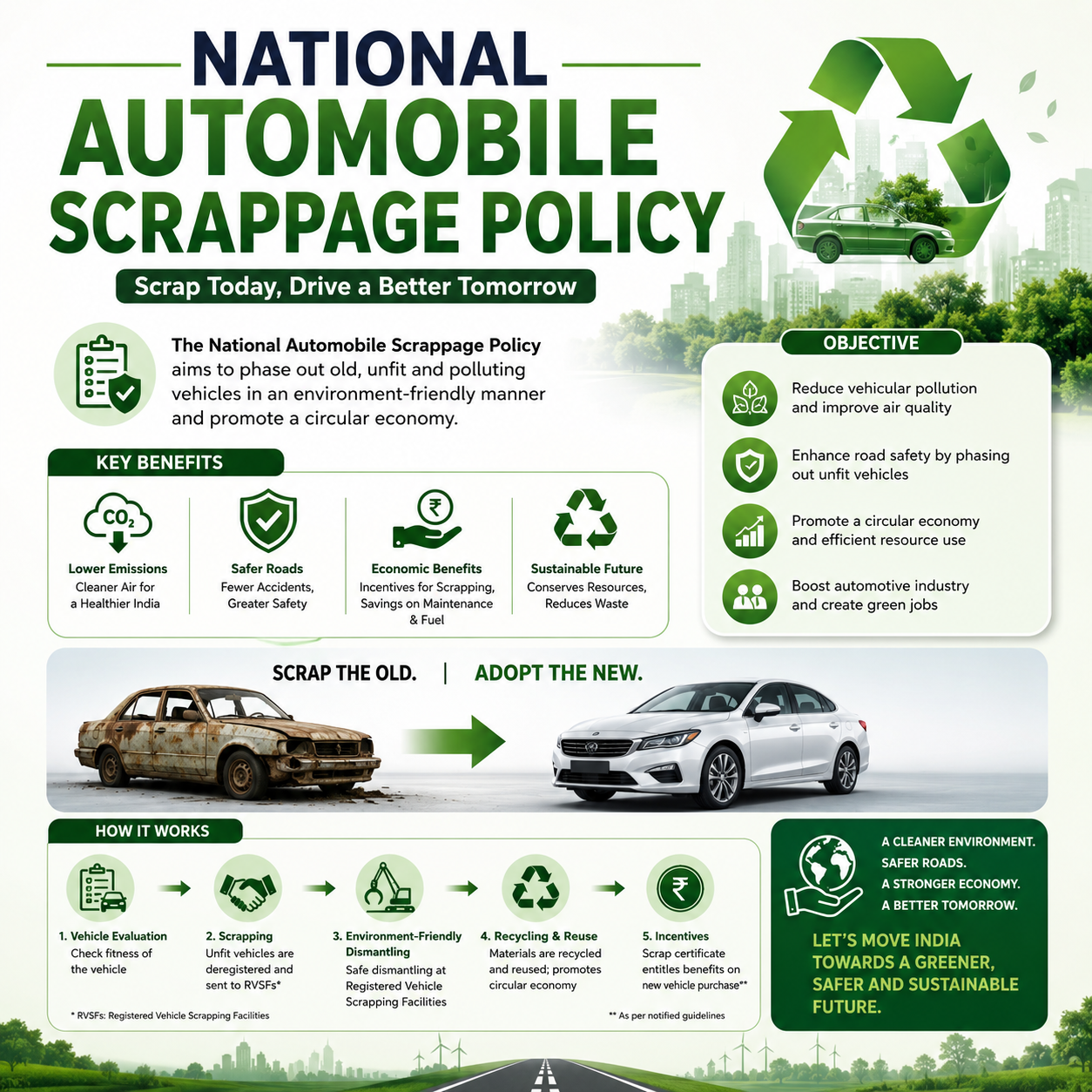
The National Automobile Scrappage Policy is a government-led initiative introduced to remove old, unfit, and polluting vehicles from Indian roads. Launched to address growing concerns about vehicular pollution and road safety, this policy encourages vehicle owners to voluntarily scrap their old automobiles in exchange for official scrapping certificates and financial incentives. The policy applies to all categories of motor vehicles including private cars, commercial vehicles, two-wheelers, and buses.
Key Objectives of the National Automobile Scrappage Policy
The primary goal of the National Automobile Scrappage Policy is to reduce vehicular emissions that contribute to air pollution in Indian cities. Old vehicles with outdated engines emit significantly higher levels of carbon monoxide, nitrogen oxides, and particulate matter compared to newer, BS6-compliant vehicles. By incentivising scrapping, the government aims to improve air quality, enhance road safety, and boost demand for new automobiles — thereby stimulating the auto sector.
Eligibility Criteria for Vehicle Scrapping
Under the National Automobile Scrappage Policy, private vehicles older than 20 years and commercial vehicles older than 15 years that fail the fitness test are eligible for scrapping. Vehicles that fail the automated fitness test at any Registered Vehicle Scrapping Facility (RVSF) can also be scrapped regardless of age. Vehicle owners receive a Certificate of Deposit after depositing their vehicle at an RVSF, which acts as the primary proof for claiming benefits.
Benefits and Incentives for Vehicle Owners
The government has announced multiple benefits under the National Automobile Scrappage Policy. State governments offer a waiver on road tax for new vehicles purchased using a scrappage certificate. Registration fee exemption is available when buying a new vehicle against a valid certificate. Additionally, vehicle manufacturers offer price discounts ranging from 3 to 5 percent on new purchases against scrapping certificates. These combined benefits make scrapping old vehicles financially rewarding for owners.
How to Scrap Your Vehicle Under This Policy
The scrapping process is simple and transparent. First, locate a government-registered Registered Vehicle Scrapping Facility near you. Submit your vehicle along with the original registration certificate, identity proof, and any outstanding dues clearance. The RVSF will issue a Deposit Certificate. This certificate is then submitted to the Regional Transport Office (RTO) for vehicle de-registration. After de-registration, you receive a Certificate of Vehicle Scrapping, which can be used to claim all applicable benefits when purchasing a new vehicle.
Impact on India’s Automobile Sector
Industry experts believe the National Automobile Scrappage Policy will inject fresh demand worth crores of rupees into the automobile sector annually. With millions of old vehicles still on Indian roads, the policy has the potential to accelerate the shift towards cleaner, more fuel-efficient transportation. Automobile manufacturers, component suppliers, and dealerships are all expected to benefit from increased sales activity driven by this policy.
Conclusion
The National Automobile Scrappage Policy is a landmark step towards a cleaner, safer, and more modern vehicle ecosystem in India. If you own an old vehicle, this is the right time to consider scrapping it legally and investing in a new, environment-friendly automobile. Not only do you contribute to a better environment, but you also save money through registration waivers, road tax exemptions, and manufacturer discounts. Act now and make the most of this beneficial policy.