












National Automobile Scrappage Policy India 2026: Complete Guide, Benefits, Eligibility & Process
Introduction
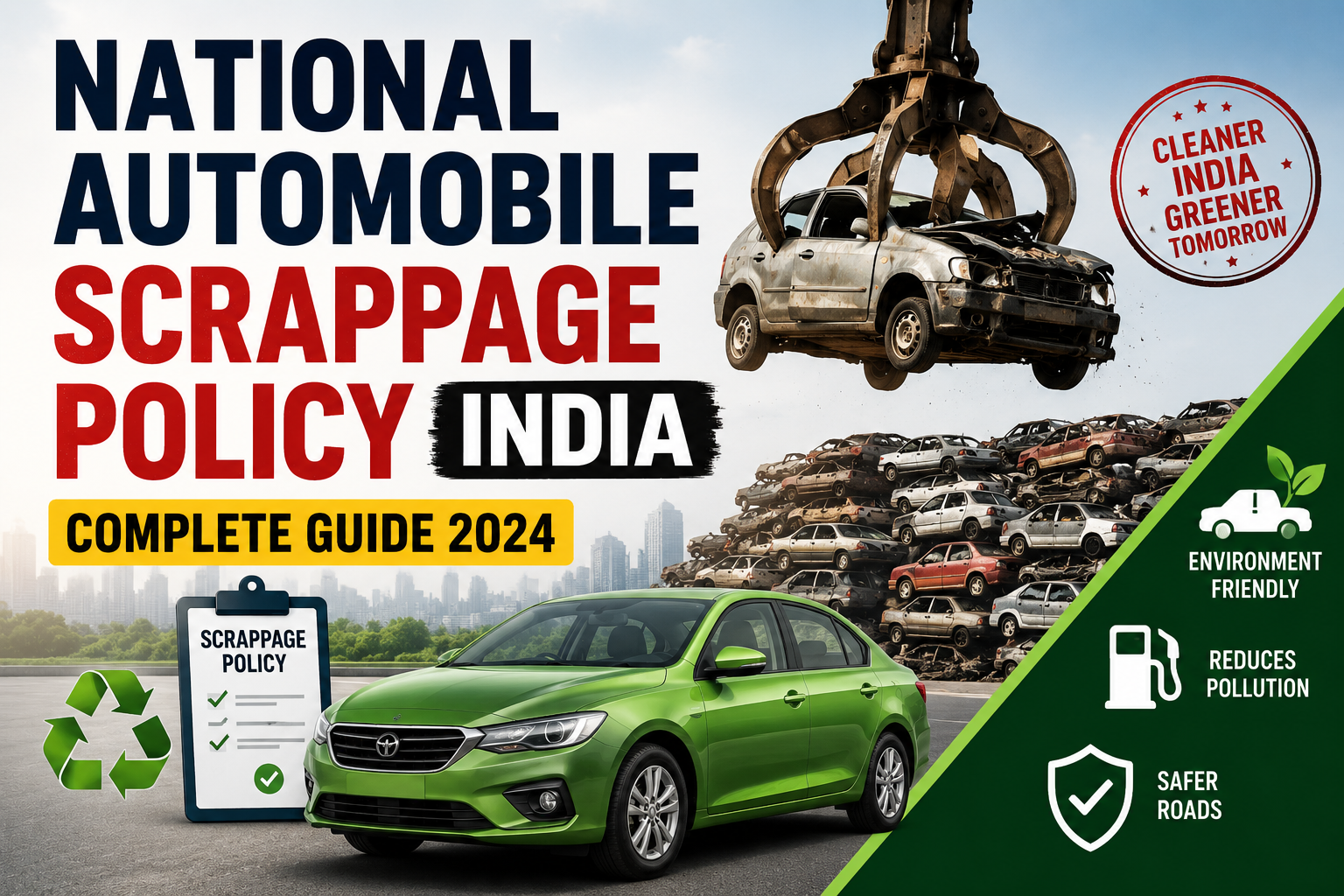
India’s automobile industry is undergoing a major transformation, and the National Vehicle Scrappage Policy is one of the most important initiatives driving this change. Introduced to remove old, unsafe, and highly polluting vehicles from Indian roads, the policy encourages vehicle owners to replace ageing vehicles with cleaner, safer, and more fuel-efficient models.
With millions of old vehicles still operating across the country, the National Automobile Scrappage Policy aims to improve road safety, reduce environmental pollution, strengthen vehicle recycling infrastructure, and boost demand for new automobiles. Whether you own an old car, motorcycle, bus, or commercial vehicle, understanding this policy can help you take advantage of valuable incentives while contributing to a cleaner future.
In this complete guide, we’ll explain how the scrappage policy works, who qualifies, the benefits available, and the step-by-step process for scrapping a vehicle in India.
What Is the National Automobile Scrappage Policy?
The National Automobile Scrappage Policy is a Government of India initiative designed to identify and remove end-of-life vehicles (ELVs) that are no longer roadworthy or environmentally sustainable.
The policy creates a structured ecosystem where old vehicles can be tested, deregistered, dismantled, and recycled through authorised Registered Vehicle Scrapping Facilities (RVSFs).
The primary goals of the policy include:
- Reducing vehicle emissions and air pollution
- Improving road safety by removing unfit vehicles
- Increasing demand for modern fuel-efficient vehicles
- Promoting sustainable recycling practices
- Creating employment opportunities in the automotive recycling sector
- Reducing India’s dependence on imported raw materials
The policy is implemented under the supervision of the Ministry of Road Transport and Highways (MoRTH).
Why Was the Scrappage Policy Introduced?
Older vehicles generally produce significantly higher emissions than modern BS6-compliant vehicles. Many ageing vehicles also lack modern safety technologies, resulting in increased maintenance costs and safety risks.
The scrappage policy addresses several major challenges:
- Rising air pollution levels in urban areas
- Increased fuel consumption from outdated engines
- A growing number of unfit vehicles on the roads
- Need for a formal automobile recycling ecosystem
- Demand for sustainable resource recovery
By encouraging owners to retire old vehicles, the government aims to modernise India’s vehicle fleet and reduce environmental impact.
Vehicle Eligibility for Scrapping
Commercial Vehicles
Commercial vehicles must undergo a fitness test after completing 15 years from the date of registration.
If the vehicle fails the automated fitness test, it may be declared unfit and become eligible for scrapping.
Private Vehicles
Private vehicles become subject to fitness testing after 20 years of registration.
Vehicles that fail the mandatory fitness test cannot renew their registration and may need to be scrapped.
Government Vehicles
Government-owned vehicles older than 15 years are generally removed from active service and deregistered under policy guidelines.
Voluntary Scrapping
Vehicle owners can choose to voluntarily scrap their vehicles before reaching the mandatory age limit and still receive scrappage-related benefits.
Benefits of Scrapping an Old Vehicle
One of the biggest advantages of the policy is the financial incentive offered to vehicle owners.
1. Scrappage Certificate
After scrapping a vehicle at an authorised facility, the owner receives a scrappage certificate (also known as a deposit certificate).
This certificate can be used when purchasing a new vehicle.
2. Registration Fee Waiver
Owners purchasing a replacement vehicle may receive a waiver on registration fees.
3. Road Tax Benefits
Several states provide road tax concessions for new vehicles purchased against a valid scrappage certificate.
4. Manufacturer Discounts
Many automobile manufacturers offer additional discounts to customers who present a scrappage certificate while purchasing a new vehicle.
5. Scrap Value Payment
Owners receive payment based on the scrap value of the vehicle, including recoverable metal and recyclable components.
How to Scrap Your Vehicle in India
The process has become much easier with authorised scrapping facilities operating across the country.
Step 1: Find an Authorised Scraping Centre
Locate a Registered Vehicle Scrapping Facility (RVSF) approved by the government.
Step 2: Submit Required Documents
Provide:
- Registration Certificate (RC)
- Aadhaar Card or PAN Card
- Address proof
- Vehicle insurance documents (if available)
Step 3: Vehicle Verification
The facility verifies ownership and checks the vehicle details.
Step 4: Vehicle Dismantling
The vehicle is dismantled using environmentally responsible procedures.
Step 5: Receive Scrappage Certificate
After successful processing, the owner receives a digital or physical SSC certificate.
Step 6: Claim Benefits
Use the certificate to avail yourself of incentives while purchasing a new vehicle.
Environmental Benefits of the Scrappage Policy
The policy is expected to deliver substantial environmental benefits over the coming years.
Key advantages include the following:
- Reduction in harmful vehicle emissions
- Lower carbon footprint
- Improved urban air quality
- Better fuel efficiency through fleet modernisation
- Increased recycling of steel, aluminium, rubber, and plastics
Modern vehicles equipped with BS6 technology emit significantly fewer pollutants compared to older generations of vehicles.
Impact on India’s Automobile Industry
The scrappage policy is expected to play a major role in supporting the growth of India’s automotive sector.
Potential benefits include the following:
- Increased sales of new cars and commercial vehicles
- Higher demand for electric vehicles
- Growth of the vehicle recycling industry
- Creation of new employment opportunities
- Increased investment in recycling infrastructure
- Stronger circular economy for automotive materials
Industry experts believe the policy will contribute significantly to the long-term sustainability of India’s automobile ecosystem.
Documents Required for Vehicle Scrapping
Before visiting an authorised scrapping centre, keep the following documents ready:
- Original Registration Certificate (RC)
- Aadhaar Card
- PAN Card
- Address Proof
- Vehicle Insurance Documents
- Loan Closure Certificate (if financed)
- NOC from the financing institution (if applicable)
Conclusion
The National Automobile Scrappage Policy represents a major step toward cleaner transportation, improved road safety, and sustainable automotive growth in India. By encouraging the responsible retirement of old vehicles, the policy not only helps reduce pollution but also supports the growth of a modern recycling industry and boosts demand for safer, more efficient vehicles.
For vehicle owners, the policy offers a practical opportunity to upgrade to newer technology while benefiting from financial incentives and reduced ownership costs. As India’s automobile sector continues to evolve, vehicle scrappage will play an increasingly important role in building a greener and more sustainable future.
Frequently Asked Questions (FAQs)
What is the National Automobile Scrappage Policy?
It is a government initiative designed to remove old, unfit, and polluting vehicles from Indian roads through authorised vehicle scrapping and recycling facilities.
After how many years can a vehicle be scrapped in India?
Commercial vehicles generally require fitness testing after 15 years, while private vehicles undergo testing after 20 years. Vehicles failing these tests may be scrapped.
What is a scrappage certificate?
A scrappage certificate is issued after an authorised facility dismantles your vehicle. It can be used to claim incentives when purchasing a new vehicle.
Can I voluntarily scrap my vehicle before 20 years?
Yes. Vehicle owners can voluntarily scrap their vehicles and may still be eligible for certain incentives and benefits.
Is vehicle scrapping mandatory in India?
No. Age alone does not automatically require scrapping. However, vehicles that fail mandatory fitness tests may become ineligible for registration renewal.