














Understanding Tata Punch Mileage: What Really Matters
When shopping for a Tata Punch, mileage is often one of the top considerations. People want to know how far their fuel will take them. The reality is that Tata Punch mileage depends on several factors beyond just the engine—your driving habits, road conditions, maintenance, and driving style all play significant roles.
I’ve researched actual owner feedback and real-world testing to give you honest numbers about what to expect from your Tata Punch fuel consumption.
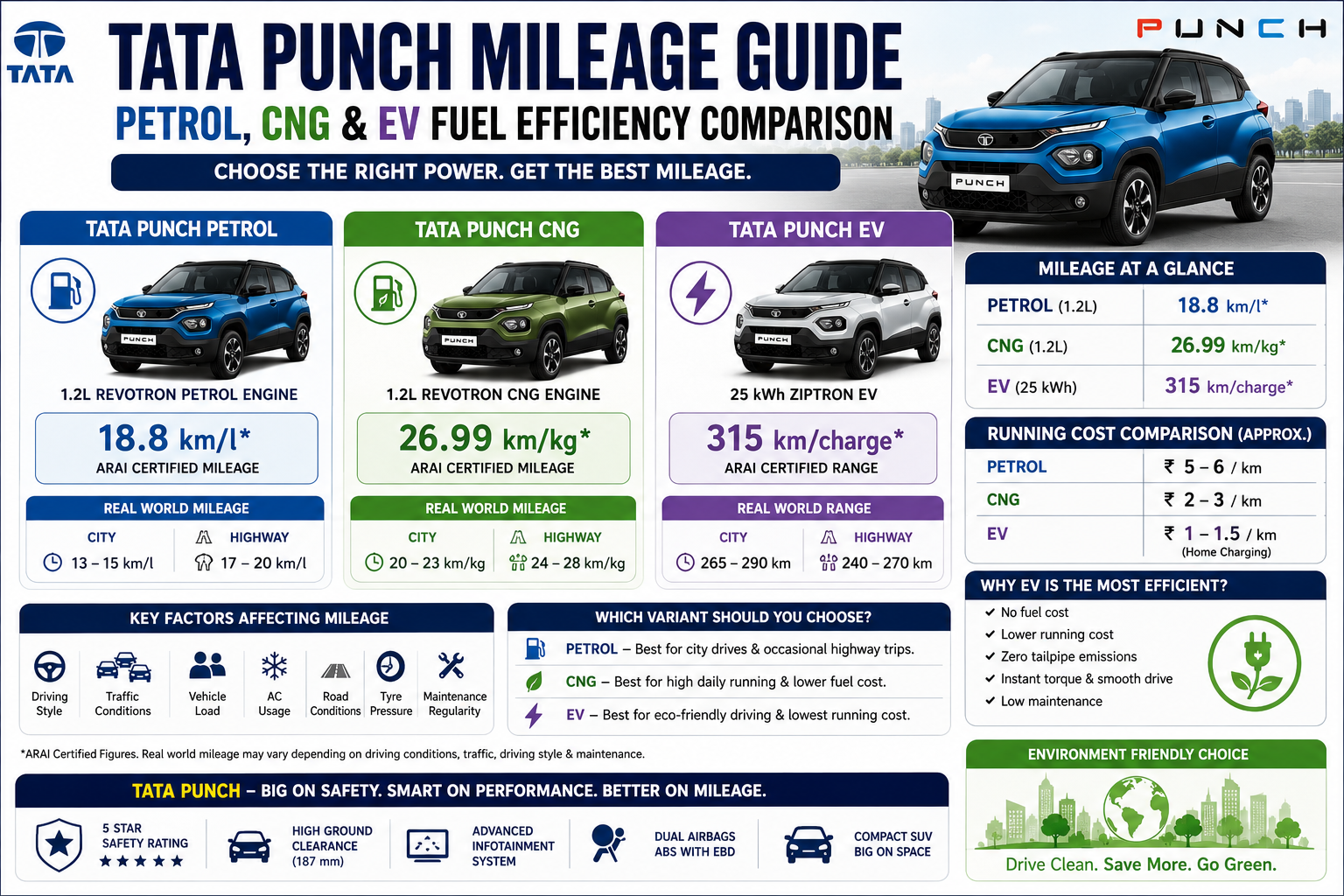
Tata Punch Petrol Mileage: Real-World Figures
The petrol engine remains the most popular choice for the Tata Punch. Understanding what kind of mileage you’ll actually get is important for your budget.
Tata Punch Petrol Mileage Breakdown
City Driving:
- Typical figure: 13-15 km/l
- Heavy traffic significantly impacts efficiency
- Stop-and-start driving burns more fuel
- AC usage reduces mileage by 15-20%
Highway Driving:
- Typical figure: 16-18 km/l
- Steady speed is more efficient
- Wind resistance at higher speeds affects consumption
- Proper tire pressure improves highway mileage
Combined Average (Real-World):
- Realistic expectation: 14-16 km/l
- This accounts for a mix of city and highway driving
- Varies based on driving habits
What Actually Influences Tata Punch Petrol Mileage
Driving Style—The Most Important Factor
Aggressive acceleration and braking reduce mileage significantly. If you accelerate smoothly and anticipate traffic, you’ll see notably better figures.
Real example: Two owners with identical Punch variants, driving the same routes, reported:
- Aggressive driver: 12-13 km/l average
- Smooth driver: 15-16 km/l average
Load and Cargo
Every extra 50 kg in the vehicle reduces efficiency by approximately 0.5-1 km/l. Carrying unnecessary items in the trunk directly impacts your fuel bills.
Maintenance Factor
A well-maintained punch with:
- Fresh engine oil
- Clean air filter
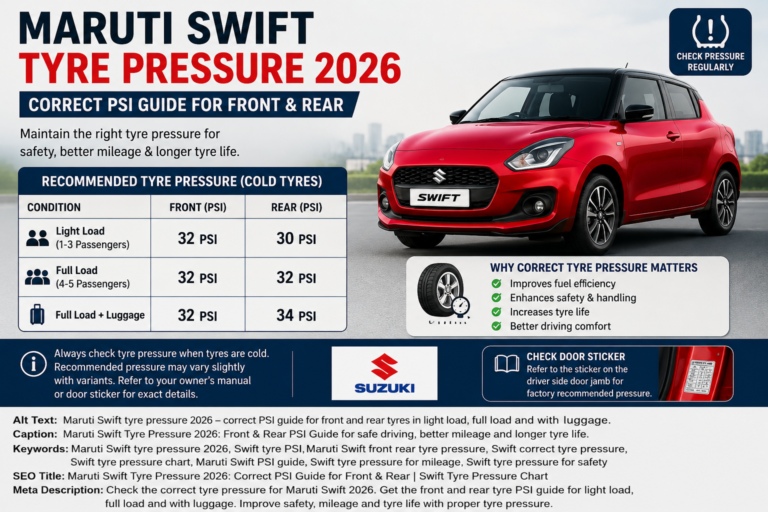
- Properly inflated tires (32 PSI for Punch)
- Regular service intervals
…will deliver better mileage than a neglected vehicle.
Air Conditioning Impact
Using AC reduces Tata Punch mileage by 15-25% compared to driving with windows down. In summer, factor this into your efficiency expectations.
Road Conditions
Driving on:
- Smooth highways: Best mileage
- Bumpy roads: Reduced efficiency
- Hilly terrain: Significantly reduced mileage
- Heavy traffic: Worst mileage
Tata Punch CNG Mileage: The Efficiency Champion
For those doing high mileage, the Tata Punch CNG option offers exceptional economy. Understanding the Tata Punch CNG average is crucial for true cost-of-ownership calculation.
Tata Punch CNG Average – Real Numbers
City Driving:
- Typical CNG average: 18-21 km/kg
- This is significantly better than petrol in the city
- Stop-and-start traffic favors CNG efficiency
Highway Driving:
- CNG average on highways: 20-23 km/kg
- Highways show CNG’s efficiency advantage
Combined CNG Average:
- Realistic expectation: 19-22 km/kg
- Based on 60% city, 40% highway mixed driving
Tata Punch CNG Mileage vs Petrol: Cost Comparison
Let’s compare actual running costs:
Monthly Fuel Cost Comparison (1,500 km monthly driving):
Petrol Variant:
- Monthly consumption: 100 liters (at 15 km/l)
- Cost at ₹100/liter: ₹10,000
CNG Variant:
- Monthly consumption: 68 kg (at 22 km/kg)
- Cost at ₹75/kg: ₹5,100
Monthly Savings with CNG: ₹4,900 Annual Savings: ₹58,800
This calculation shows why CNG variants are popular with high-mileage drivers. The fuel cost advantage is substantial.
Tata Punch CNG Launch Date and Models
Tata introduced CNG variants in the Punch lineup to capture the efficiency-conscious market. The Tata Punch CNG launch brought affordable CNG motoring to the micro-SUV segment.
Available models:
- Tata Punch pure CNG
- Tata Punch creative CNG
The CNG option is particularly attractive for:
- Daily commuters
- Taxi operators
- Those driving over 20,000 km annually
- People in cities with good CNG infrastructure
Tata Punch EV Range: The Electric Revolution
The Tata Punch EV represents the future of personal mobility. Instead of mileage per liter, we discuss range per charge.
Tata Punch EV Range Specifications
Tata Punch EV Real-World Range:
- Claimed range: 250-300 km per full charge
- Real-world range: 220-260 km (accounting for driving conditions)
- City driving reduces range by 10-15%
- Efficient highway driving extends range
Tata Punch EV Charging
Home Charging (Standard Charger):
- Time to full charge: 9-10 hours
- Suitable for overnight charging
- Costs approximately ₹3-4 per km
DC Fast Charging (Public Chargers):
- Time to 80% charge: 45-60 minutes
- Ideal for longer journeys
- Increasingly available in metros
Tata Punch EV Cost Per Kilometer
Cost Comparison:
Petrol Punch: ₹6-7 per km (at 15 km/l, ₹100/liter) CNG Punch: ₹3.4-4 per km (at 22 km/kg, ₹75/kg) EV Punch: ₹2-2.5 per km (electricity cost)
The EV offers the lowest per-km running cost, plus government incentives make the purchase more affordable.
Tata Punch Specifications 2025: Engine Details
Understanding the engineering behind the mileage helps. Here are the specifications:
Petrol Engine Specifications
- Engine Displacement: 1199 cc
- Power Output: 84 PS @ 6,000 RPM
- Torque: 113 Nm @ 3,600 RPM
- Configuration: 3-cylinder, 12-valve, petrol engine
- Transmission: 5-speed manual (standard), available automatic
- Fuel Tank Capacity: 37 liters
- Range on Full Tank: 500-600 km approximately (at 13-16 km/l)
CNG Engine Specifications
- Engine Displacement: Same 1199 cc
- CNG Tank Capacity: 40 liters equivalent
- Range on Full CNG Tank: 850-900 km, approximately
- Transmission: 5-speed manual (optimized for CNG)
EV Specifications
- Battery Capacity: 30-40 kWh (varies by trim)
- Range: 250-300 km claimed
- Charging Time: 9-10 hours (home charger)
- Motor Power: Similar performance to petrol in city driving
Tata Punch Ground Clearance and Efficiency Connection
Interestingly, the Tata Punch’s ground clearance affects efficiency:
Tata Punch Ground Clearance:
- Ground clearance: 180 mm
- This moderate clearance means:
- Better aerodynamics than higher vehicles
- More efficient on rough roads than sedans
- Improved stability at highway speeds
The 180 mm ground clearance helps the Punch maintain decent fuel efficiency while providing genuine off-road capability.
Improving Your Tata Punch Mileage: Practical Tips
Beyond engine and fuel type, you control several factors that impact efficiency:
Tire Maintenance
Proper Inflation Impact:
- Correct pressure (32 PSI): Optimal mileage
- Under-inflated (28 PSI): 5-10% less mileage
- Over-inflated (35 PSI): Slightly better mileage but harsher ride
Check tire pressure monthly for best results.
Driving Techniques
Smooth Acceleration: Gradual acceleration uses 30% less fuel than aggressive acceleration. Start smoothly from traffic lights.
Maintain Steady Speed: On highways, maintain 80-90 km/h for best efficiency. Every 10 km/h increase beyond 100 km/h reduces mileage by approximately 5%.
Anticipate Traffic: Look ahead and coast to a stop rather than braking hard. This smooth driving significantly improves overall mileage.
Avoid Idling: Modern engines are efficient enough that turning off for waits over 30 seconds saves fuel.
Vehicle Maintenance
Regular Oil Changes: Fresh engine oil reduces friction, improving efficiency. Change every 5,000 km.
Air Filter Replacement: Clogged filters restrict airflow, reducing mileage. Replace every 10,000-15,000 km.
Engine Carbon Cleaning: Periodic engine cleaning restores efficiency lost through carbon buildup.
Wheel Alignment: Misaligned wheels create drag. Annual alignment checks help maintain mileage.
AC Usage and Tata Punch Mileage
Air conditioning’s impact deserves special attention:
AC Compressor Load: When AC runs, it draws additional power from the engine, requiring more fuel.
Percentage Impact:
- AC off: Baseline mileage (15 km/l example)
- AC on moderate: 12.5 km/l (17% reduction)
- AC on high: 11-12 km/l (20-25% reduction)
Smart AC Usage:
- In peak heat, use AC but not on the highest setting
- Pre-cool the vehicle while parked
- Use a sunshade to reduce cooling load
- Open windows initially for air circulation
Real Owner Reviews: Tata Punch 2023
What actual owners report about the Tata Punch mileage:
Positive Feedback:
- “Getting consistent 15-16 km/l in mixed driving.”
- “CNG variant has become economical for my daily 50 km commute.”
- “Better than expected, even in city traffic.”
General Consensus:
- Petrol mileage is in line with specifications
- Actual figures depend heavily on driving style
- CNG offers excellent economy for high-mileage users
- EV works great for daily commuting
Tata Punch Automatic Mileage Impact
The automatic transmission version affects efficiency:
Manual vs Automatic:
- Manual transmission: Better fuel efficiency (baseline)
- Automatic transmission: 5-10% lower mileage
- Automatic trade-off: Improved comfort and convenience
In city driving, many find the automatic’s convenience worth the slight efficiency loss.
Seasonal Impact on Tata Punch Mileage
Mileage varies seasonally:
Summer Months:
- AC usage increases significantly
- Expect 12-14 km/l for petrol
- A hot engine runs less efficiently
Winter Months:
- Better efficiency without AC load
- The engine reaches optimal temperature quickly
- Can achieve 15-16 km/l for petrol
- A cold engine requires a longer warm-up
Monsoon Months:
- Humidity increases the load
- Road conditions deteriorate
- Expect moderate mileage (14-15 km/l)
Tata Punch Top Speed and Efficiency Relationship
The Tata Punch’s top speed capabilities connect to efficiency:
- Top speed: 145-150 km/h
- Optimal efficiency speed: 80-90 km/h
- At top speed, Mileage drops significantly due to aerodynamic drag
Maintaining moderate speeds maximizes both safety and fuel efficiency.
Conclusion: Choosing Based on Mileage Requirements
Your choice between petrol, CNG, and EV should consider your actual needs:
Choose Petrol if:
- Annual mileage under 15,000 km
- Mostly city driving
- CNG stations unavailable in your area
- You value engine performance
Choose CNG if:
- Annual mileage over 20,000 km
- Regular city commuting
- Good CNG infrastructure in your area
- Cost-of-ownership is paramount
Choose EV if:
- Daily driving under 100 km
- Home charging available
- Environmental consciousness matters
- You want the lowest fuel costs
The Tata Punch mileage performance across all fuel options is respectable. Combined with a low purchase price, it makes this micro SUV a smart choice for budget-conscious buyers.
Quick Mileage Reference:
| Fuel Type | City Mileage | Highway Mileage | Combined Average |
|---|---|---|---|
| Petrol | 13-15 km/l | 16-18 km/l | 14-16 km/l |
| CNG | 18-21 km/kg | 20-23 km/kg | 19-22 km/kg |
| EV | – | – | 4-5 km/unit |
Related Searches: Best fuel-efficient micro SUV | CNG vehicle mileage comparison | EV charging time | Tata Punch vs Maruti | Affordable mileage vehicle